

The Irish Traditional Music Archive (ITMA) is committed to providing free, universal access to the rich cultural tradition of Irish music, song and dance. If you’re able, we’d love for you to consider a donation. Any level of support will help us preserve and grow this tradition for future generations.
c.1838-c.1918
This project is co-funded by Ireland’s Department of Culture, Communications & Sport and Department of Foreign Affairs & Trade as part of America 250.

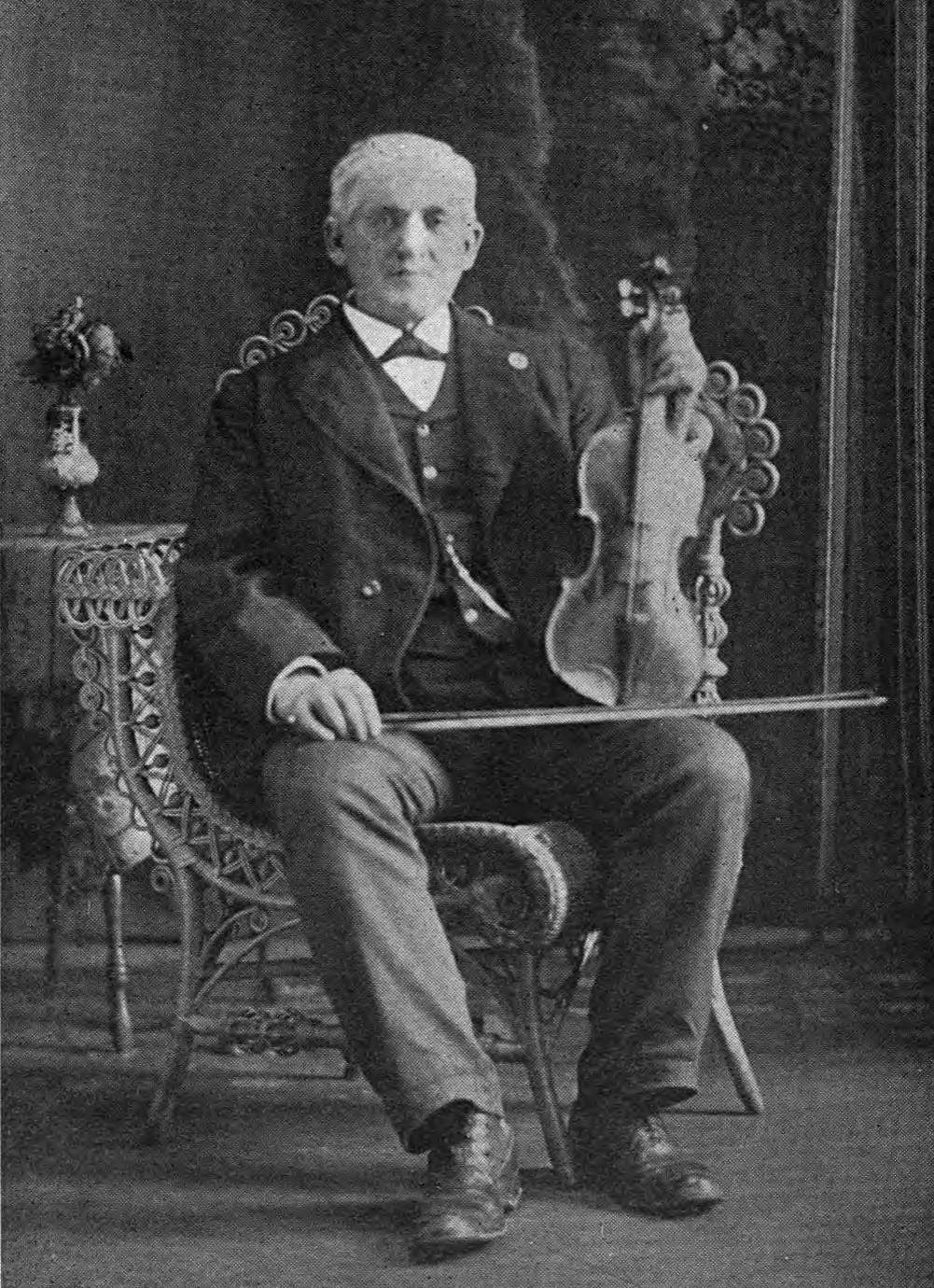
Edward Cronin, born c.1838 in Limerick Junction, County Tipperary was a highly gifted fiddle player and his distinctive style offers a window into the 19th century tradition through some of the earliest wax cylinder recordings. As a boy, Cronin was already in demand as a fiddler, both as a soloist and dance player. A weaver by trade, he immigrated to Troy, New York state but was unable to find work and later moved to Chicago. There he was employed at the Deering Harvester Works, a manufacturing plant for farm machinery, in a position not conducive with the intricate finger-work that Cronin applied to the fiddle. Cronin was an important source of many tunes in Francis O’Neill’s published works. O’Neill later criticized some of his contributions on the basis that time signatures were inaccurate, a judgement considered harsh given Cronin’s background as a ‘traditional’ fiddle player. In 2010 the Ward Irish Music Archives released a CD of newly discovered Francis O’Neill cylinder recordings. The two tracks from Edward Cronin, previously unheard was an invaluable insight into an aspect of 19th century fiddle playing and proved highly popular among contemporary musicians. Also a composer of note, he wrote the hornpipes ”Rogers O’Neill’s” and ”Caroline O’Neill’s” for two of Francis O’Neill’s children.