

The Irish Traditional Music Archive (ITMA) is committed to providing free, universal access to the rich cultural tradition of Irish music, song and dance. If you’re able, we’d love for you to consider a donation. Any level of support will help us preserve and grow this tradition for future generations.
1869-1938
This project is co-funded by Ireland’s Department of Culture, Communications & Sport and Department of Foreign Affairs & Trade as part of America 250.

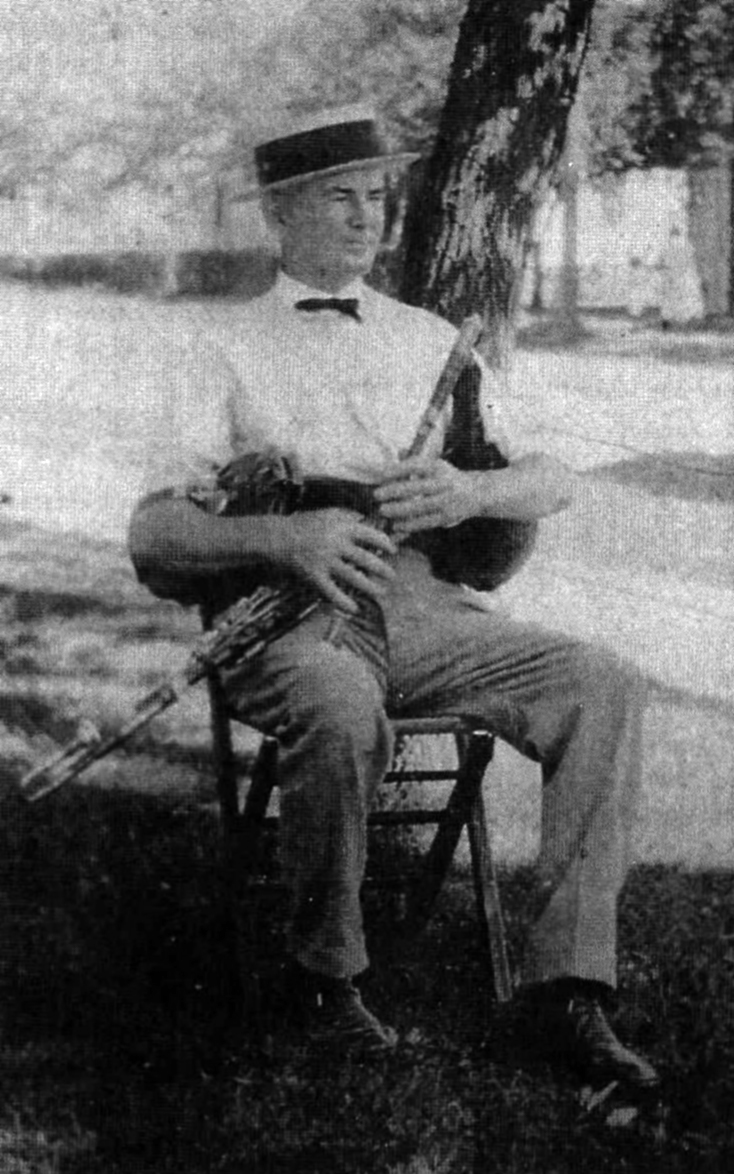
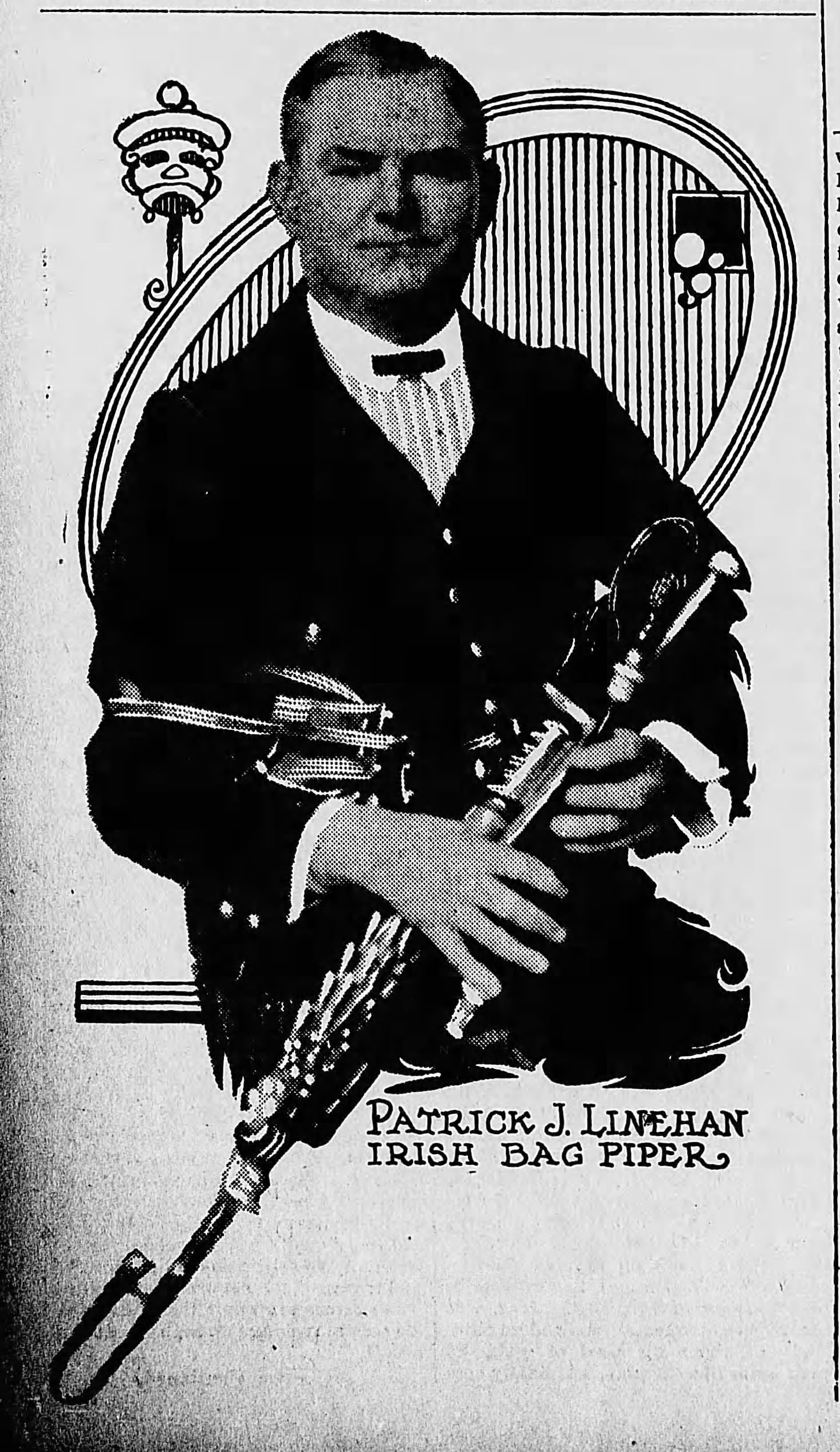
Patrick Linehan was born in New York City in 1869. His father Edward was from Buttevant, County Cork and his mother Ellen (née Grady) was from south County Limerick. Soon after Patrick’s birth, the family moved to Minneapolis where Edward was a quarryman. When Ellen died in 1886, the Linehans moved north to Sandstone where Edward worked in the quarry and also played warpipes in local parades. In Sandstone, Patrick spent time in logging camps, broke a logjam using dynamite, sang Irish ballads at midwinter farmhouse parties and survived the 1894 Hinckley-Sandstone Fire. In 1898, he was sent to Minnesota State Prison for assaulting a railroad conductor who caught him trainhopping. Following his release in 1902, Linehan settled in Minneapolis, married and built a new life, eventually working as a grain inspector. By the 1910s he was performing on uilleann pipes. He also played concertina and led the fife section in a drum and bugle corps. On pipes, he played for picnics, steamboat cruises, Irish dance competitions and on stage alongside the silent film Ireland: A Nation. He teamed up with fiddle player, Mike Sullivan to play for dances and appeared on radio at least four times in the 1920s.